
Marketing Funnel for Small Business: How to Turn Visitors Into Customers
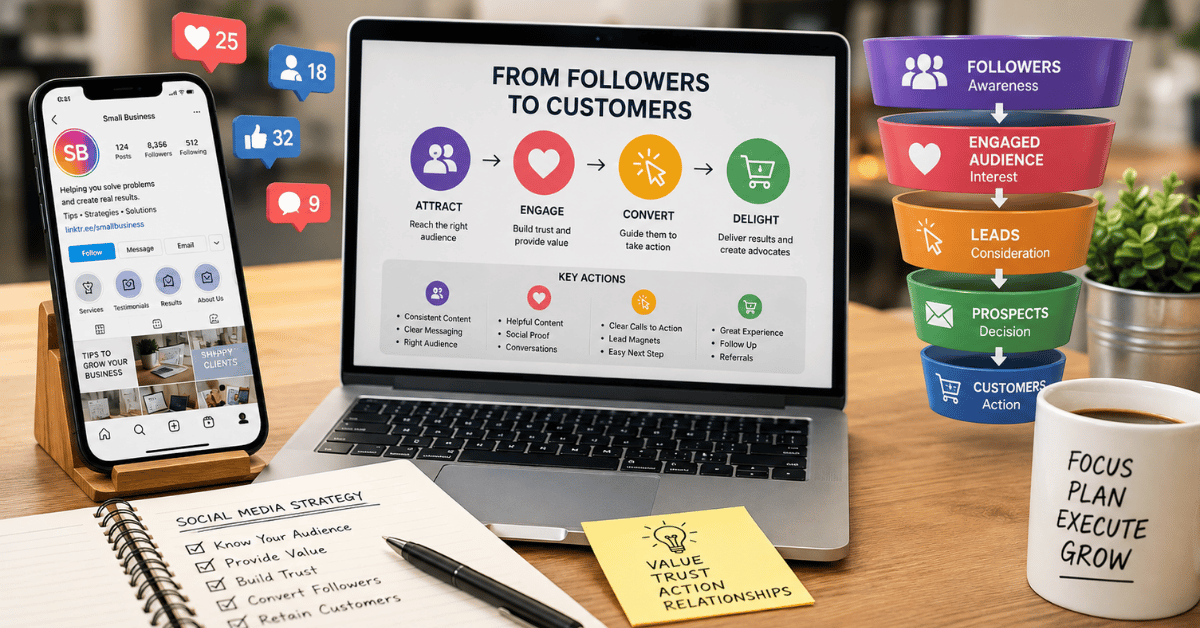

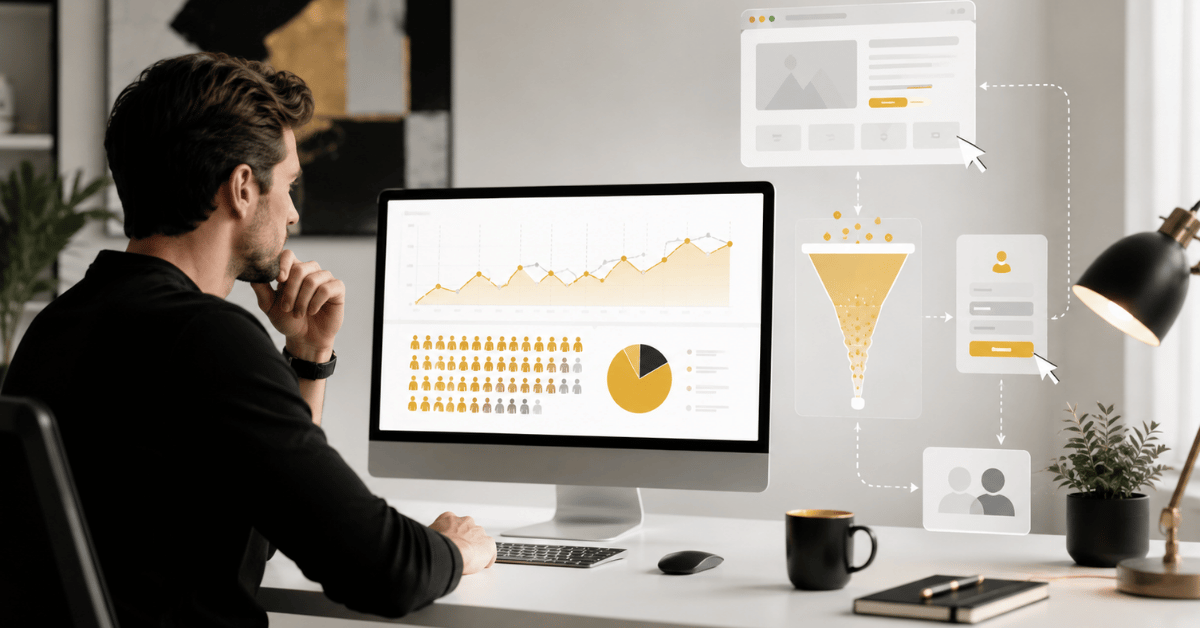



Table of Contents
A marketing funnel for small business growth is not about building a complicated system full of tools, automations, and dashboards. It is about creating a clear path so people who discover your business know what to do next.
Many small businesses are already doing marketing. They post on social media, work on SEO, update their Google Business Profile, send emails, run ads, or ask for referrals. But even with all that effort, they may still feel like leads are inconsistent.
The issue is usually not that the business needs to do more. The issue is that the customer journey is not clear enough.
Someone may find your business on Google, visit your website, read about your services, and leave without taking action. Another person may follow you on social media, like a few posts, and then forget about you. A lead may submit a form but never receive a strong follow-up.
A funnel helps connect those moments.
It gives your marketing a structure: attract the right people, help them understand your value, make it easy to take action, and follow up in a way that feels useful instead of pushy.
What Is a Marketing Funnel?
A marketing funnel is the journey someone takes before becoming a customer.
For a small business, that journey can be very simple.
A person searches for a service, finds your business, visits your website, reads a page, submits a form, receives a follow-up, books a call, and eventually becomes a customer.
The funnel is not the tool. It is the path.
The clearer that path is, the easier it becomes for potential customers to move from interest to action.
Without a funnel, your marketing may create attention, but that attention may not turn into leads or customers.
Why Small Businesses Need a Funnel
Small businesses usually do not have unlimited time, large teams, or big marketing budgets. That means every marketing effort needs to have a purpose.
A funnel helps you understand what each channel is supposed to do.
Your Google Business Profile may help people find you locally. Your website helps explain your services. Your blog content answers questions. Your email marketing keeps you present after the first interaction. Your automation helps follow up without relying only on memory. Your tracking shows what is actually working.
When these pieces are disconnected, marketing feels random.
When they are connected, marketing becomes easier to improve.
If your business is struggling to appear in search results, our article on why is my business not showing up on Google explains some of the most common visibility issues small businesses face.
The First Step: Attract the Right People
The first part of any funnel is visibility, but not all visibility is useful.
A small business does not need to reach everyone. It needs to reach people who are likely to care about the service, product, location, or problem the business solves.
That can happen through SEO, Google Maps, referrals, social media, paid ads, local partnerships, or niche creators.
For example, a local service business may get its best leads from Google Business Profile and organic search. A boutique may benefit from local creators and Instagram. A consultant may attract leads through educational content and LinkedIn.
The point is not to be everywhere. The point is to be visible in the places where your ideal customers are already paying attention.
For local businesses, an optimized Google Business Profile for small businesses can be one of the strongest entry points into the funnel because people can call, visit the website, request directions, or read reviews directly from Google.
The Second Step: Make the Next Action Obvious
Once someone finds your business, the next step should be easy to understand.
This is where many small business websites lose people.
A visitor lands on the site, but the page does not clearly explain what the business does, who it helps, why it is trustworthy, or what the visitor should do next.
A good funnel removes that confusion.
If someone is ready to talk, they should be able to contact you easily. If they are still researching, they should find helpful information. If they need trust, they should see reviews, testimonials, case studies, examples, or clear explanations.
The goal is not to push every visitor into the same action. The goal is to give each type of visitor a logical next step.
That next step could be booking a call, filling out a form, reading a guide, joining an email list, requesting a quote, or visiting a service page.
The Third Step: Follow Up Before the Lead Goes Cold
Most leads do not convert because they saw one page one time.
People get distracted. They compare options. They wait. They forget. They need more context before making a decision.
That is why follow-up matters.
For a small business, follow-up does not have to be aggressive. It can be simple and helpful: a confirmation email after a form submission, a reminder to book a call, a short educational email, or a personal response that answers the person’s question clearly.
This is where marketing automation for small businesses can help. Automation can make sure leads receive timely communication without forcing the owner or team to manually remember every step.
The Fourth Step: Build Trust Before Asking for the Sale
A funnel is not just about moving people quickly. It is also about helping them feel confident.
Small businesses often win when they feel more trustworthy, more approachable, or more relevant than the bigger competitor.
That trust can come from helpful content, reviews, case studies, before-and-after examples, strong service pages, clear pricing information, professional communication, or consistent branding.
It can also come from other people talking about your business.
For example, micro-influencer marketing for small businesses can help create social proof and introduce your business to a more relevant audience through niche creators who already have trust with their community.
The Fifth Step: Measure What Is Working
A funnel should not be based on guessing.
You need to know where people are coming from, what they are clicking, where leads are being generated, and which actions are helping the business grow.
This does not mean drowning in reports. It means paying attention to the numbers that actually matter.
Are people finding you through Google? Are they clicking from your Google Business Profile to your website? Are forms being submitted? Are calls coming from campaigns? Are emails helping people return? Are leads becoming customers?
Once you understand those answers, you can improve the funnel.
Our guide on marketing tracking for small businesses explains how to measure the parts of your marketing that are actually creating results.
A Funnel Should Feel Simple, Not Complicated
One of the biggest mistakes small businesses make is thinking they need a complex funnel with endless steps.
They do not.
A simple funnel can be enough:
Someone discovers your business.
They understand what you offer.
They see a clear next step.
They receive a helpful follow-up.
They decide whether to become a customer.
That is the foundation.
Once that foundation works, you can improve it with better content, better tracking, better email sequences, better landing pages, or better ads.
But the first goal is clarity.
Final Thoughts
A marketing funnel for small business growth helps your marketing work as a system instead of a collection of disconnected activities.
It helps people move from awareness to trust, from trust to action, and from action to a real business relationship.
For small businesses, this matters because every lead has value. Every website visit, phone call, email subscriber, review, and referral can become part of a bigger growth system when the journey is clear.
The goal is not to make your marketing more complicated.
The goal is to make it easier for the right people to find you, understand you, trust you, and take the next step.
If your business needs help turning scattered marketing efforts into a clearer growth system, our digital marketing services for small businesses can help you connect strategy, visibility, tracking, and conversion.