
Micro-Influencer Marketing for Small Businesses: How to Use Niche Creators to Reach the Right Audience


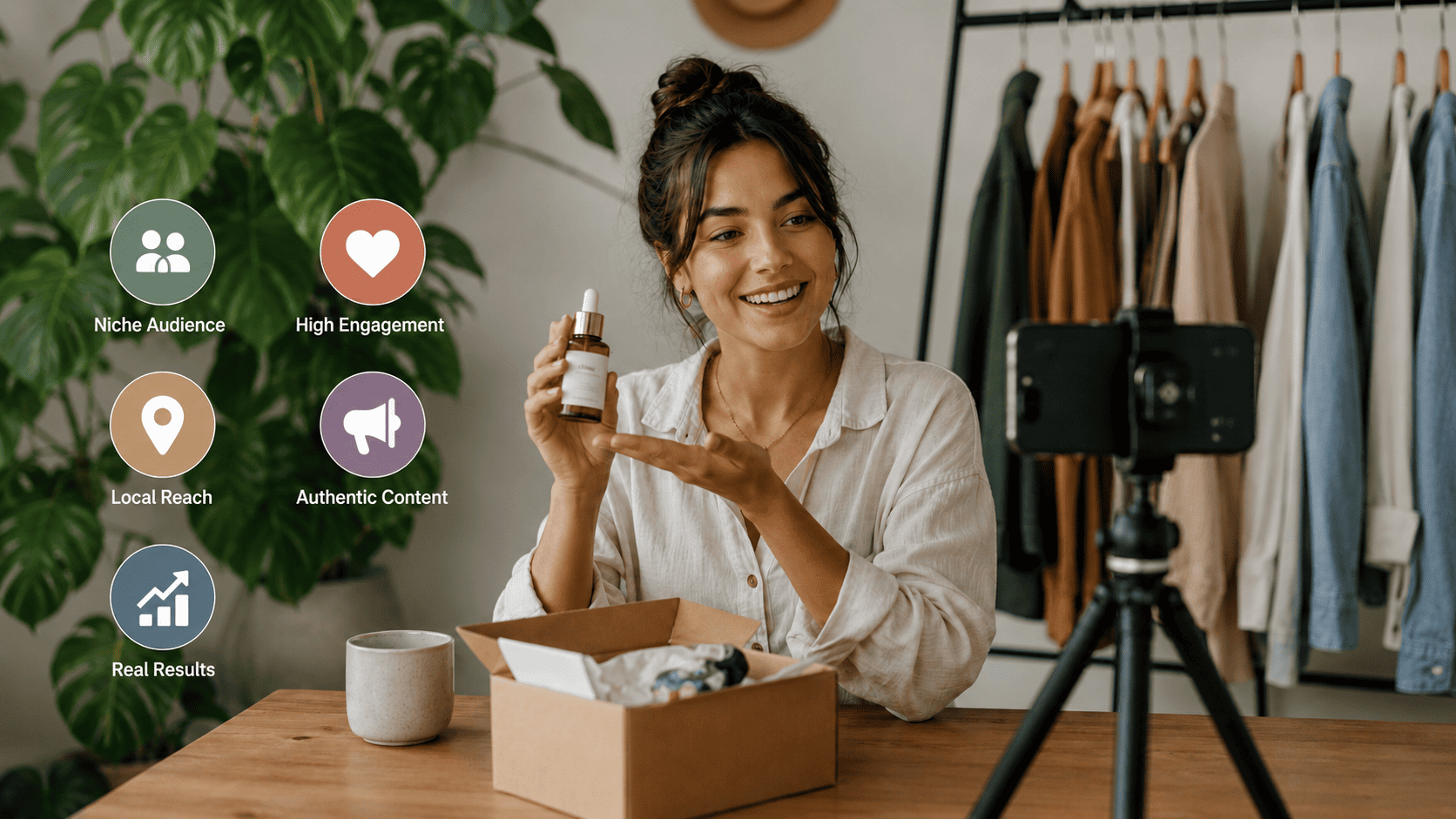
Table of Contents
Micro-influencer marketing for small businesses can be a powerful way to reach specific audiences, build trust faster, and create more authentic visibility without needing the budget of a large brand. For many small businesses, the idea of influencer marketing may sound expensive, complicated, or reserved for national companies.
But that is not always the case.
In many situations, micro-influencers and niche influencers can be more useful for small businesses than large creators with massive audiences. Why? Because smaller creators often have more focused communities, stronger relationships with their followers, and content that feels more personal and relatable.
For a small business, that can make a big difference.
The goal is not to work with the biggest influencer. The goal is to work with the right creator for the right audience.
What Is a Micro-Influencer?
A micro-influencer is usually a creator with a smaller but engaged audience. The exact follower range can vary depending on the platform and industry, but micro-influencers are often associated with audiences in the thousands or tens of thousands rather than hundreds of thousands or millions.
What matters most is not the follower count.
What matters is relevance, trust, engagement, and audience fit.
A local food creator with 8,000 engaged followers in your city may be more valuable to a restaurant than a lifestyle creator with 300,000 followers across different countries.
A niche fitness coach with a focused community may be more useful for a wellness studio than a broad entertainment influencer.
A local mom blogger may be more valuable to a pediatric clinic, family photographer, tutoring service, or children’s activity center than a general celebrity-style creator.
The strength of micro-influencer marketing comes from connection.
What Is a Niche Influencer?
A niche influencer is a creator focused on a specific topic, lifestyle, profession, location, or community.
Examples include:
- Local food creators
- Fitness creators
- Mom bloggers
- Real estate creators
- Travel creators
- Wellness creators
- Tech reviewers
- Beauty specialists
- Home improvement creators
- Pet creators
- Wedding creators
- Local community pages
- Industry-specific educators
A niche influencer does not need to have a huge audience. Their value comes from having the right audience.
For small businesses, niche relevance is often more important than reach.
Why Micro-Influencers Work Well for Small Businesses
Small businesses usually do not need millions of impressions. They need visibility among people who are likely to care, trust, visit, book, buy, or inquire.
Micro-influencers can help because their recommendations often feel more natural than traditional ads.
Their followers may see them as relatable people rather than distant celebrities. This can make their content feel more credible, especially when the collaboration is authentic and aligned with the creator’s normal content.
For example, a local restaurant collaboration with a food creator can show the real experience of visiting the restaurant. A boutique can work with a local fashion creator to show how products look in real life. A service business can partner with a niche expert to explain the value of the service in a way that feels educational.
The best collaborations do not feel forced.
They feel like a natural recommendation.
Micro-Influencers Can Help You Reach a More Relevant Audience
One of the biggest advantages of working with micro-influencers is audience quality.
Large influencers may have broad reach, but that reach is not always relevant. A small business usually needs people in a specific city, niche, interest group, or buying stage.
Micro-influencers and niche creators can help you narrow the audience.
For example:
A local coffee shop may work with creators who post about local cafés, coworking, student life, or weekend spots.
A fitness studio may work with wellness creators, local athletes, or lifestyle creators who already talk about movement and health.
A law firm may partner with educational creators or local business voices to create informative content around common legal questions, without making unrealistic claims.
A marketing agency may collaborate with small business creators, startup communities, local entrepreneurs, or business coaches.
The more aligned the creator’s audience is with your ideal customer, the better the collaboration can perform.
Micro-Influencer Marketing Is Not Just About Awareness
Many small businesses think influencer marketing is only for brand awareness.
Awareness matters, but micro-influencer campaigns can also support other goals.
They can help with:
- Website visits
- Local foot traffic
- Booked appointments
- Email signups
- Product sales
- Event attendance
- Social proof
- Content creation
- Community trust
- Brand credibility
- Retargeting audiences
- Search visibility through branded demand
For small businesses, one of the hidden benefits is content.
A creator can produce photos, short videos, testimonials, demos, tutorials, or experience-based content that your business may be able to reuse, depending on the agreement.
This can help your social media, ads, website, email campaigns, and landing pages.
How to Choose the Right Micro-Influencer
Choosing the right influencer is not about picking whoever has the most followers.
Before working with a creator, review:
- Audience location
- Audience interests
- Engagement quality
- Comment authenticity
- Content style
- Brand alignment
- Past collaborations
- Posting consistency
- Values and tone
- Platform fit
- Ability to explain your offer clearly
Look beyond likes.
Read the comments. Are people asking questions? Do followers trust the creator? Is the audience local or relevant? Does the creator produce content that matches your brand?
For small businesses, a smaller creator with the right audience can often outperform a larger creator with a disconnected audience.
Questions to Ask Before Collaborating
Before starting a campaign, ask a few practical questions.
- Who is the audience?
- Where are most followers located?
- What type of content performs best?
- Has the creator worked with similar businesses before?
- What deliverables are included?
- Can the business reuse the content?
- How will the collaboration be disclosed?
- What is the timeline?
- What link, code, landing page, or tracking method will be used?
- What does success look like?
Clear expectations help avoid confusion and make the collaboration easier to measure.
Types of Micro-Influencer Campaigns for Small Businesses
Small businesses can use micro-influencers in different ways depending on their goals.
Local Experience Campaigns
This works well for restaurants, cafés, gyms, salons, clinics, boutiques, event venues, and local service businesses.
The creator visits the business and shares the experience through photos, Reels, TikToks, stories, or short-form videos.
The goal is to make the business feel real, local, and worth trying.
Product or Service Demonstrations
This works well when your offer needs explanation.
A creator can show how a product works, how a service is experienced, or why the solution is useful.
This can be especially helpful for businesses that sell something people need to understand before buying.
Educational Collaborations
Some niche influencers are strong educators.
For example, a financial planner, attorney, wellness provider, marketing agency, consultant, or coach may collaborate with a creator to explain a problem, share tips, or answer common questions.
This format can build trust without feeling like a hard sell.
Giveaway Campaigns
Giveaways can help increase reach, but they should be used carefully.
A giveaway may bring attention, but not all participants will be qualified buyers. For small businesses, giveaways work best when the prize is closely related to the service or product.
A generic prize may attract people who only want free things.
A relevant prize attracts a more useful audience.
Affiliate or Referral Campaigns
Some small businesses use creator-specific discount codes, referral links, or affiliate partnerships.
This can help track performance and reward creators based on results.
However, affiliate campaigns should be transparent, properly disclosed, and aligned with your brand.
The FTC explains that influencers should disclose a material connection to a brand, including payment, free products, discounts, employment, family relationships, or other perks, and those disclosures should be hard to miss.
How to Track Micro-Influencer Campaigns
Tracking is essential.
Without tracking, it is hard to know whether the campaign actually worked.
Small businesses can track influencer campaigns through:
- UTM links
- Discount codes
- Referral codes
- Landing pages
- Booking links
- Contact form fields
- “How did you hear about us?” questions
- Website analytics
- Social media engagement
- Direct messages
- Phone call tracking
- Email signups
- Sales or appointment data
The key is to define the goal before the campaign starts.
If your goal is awareness, you may track reach, impressions, profile visits, and engagement.
If your goal is leads, you may track form submissions, calls, bookings, or email signups.
If your goal is sales, you may track purchases, codes used, revenue, and repeat customers.
If you want a deeper breakdown of how to measure campaign performance, read our guide on marketing tracking for small businesses.
How Micro-Influencer Marketing Fits Into a Small Business Strategy
Micro-influencer marketing should not be isolated from the rest of your marketing.
It works best when connected to your broader strategy.
For example, influencer content can support:
- Social media
- Paid ads
- Email marketing
- Website content
- Landing pages
- Google Business Profile updates
- Product launches
- Event promotion
- Local SEO
- Retargeting campaigns
A creator may introduce people to your business, but your website, profile, reviews, email follow-up, and tracking system help convert that attention into action.
This is why influencer marketing should be part of a connected marketing system, not just a one-off post.
If your business needs help connecting content, paid media, tracking, and local visibility, our digital marketing services for small businesses can help you build a strategy that turns attention into measurable growth.
Common Mistakes Small Businesses Make With Influencer Marketing
Influencer marketing can work well, but small businesses often make mistakes that limit results.
One common mistake is choosing creators based only on follower count. A large audience does not always mean a relevant audience.
Another mistake is giving creators no direction. While creators should have creative freedom, the business should still provide key talking points, goals, links, deadlines, and brand guidelines.
Small businesses also sometimes forget to track results. Without links, codes, landing pages, or analytics, it becomes difficult to measure impact.
Other common mistakes include:
- Working with creators who do not match the brand
- Ignoring local audience fit
- Focusing only on likes
- Not checking content quality
- Not agreeing on usage rights
- Not planning a follow-up strategy
- Making the content too scripted
- Forgetting disclosure requirements
- Expecting one post to solve everything
Influencer marketing works better when it is planned as part of a broader customer journey.
How Much Should Small Businesses Pay Micro-Influencers?
There is no single price that applies to every campaign.
Costs can vary depending on the creator’s audience size, niche, platform, content format, deliverables, usage rights, exclusivity, and timeline.
Some collaborations may involve a flat fee. Others may include free products, services, affiliate commission, or a combination.
Small businesses should be careful with unpaid or product-only offers. Some creators may accept them, especially if the product or service is highly relevant, but professional content creation takes time.
The most important thing is clarity.
Before starting, agree on:
- Deliverables
- Payment or compensation
- Posting dates
- Approval process
- Disclosure language
- Content usage rights
- Tracking method
- Reporting expectations
A simple agreement can prevent confusion.
How to Start a Micro-Influencer Campaign
If you are starting from zero, keep it simple.
First, define your goal.
Do you want awareness, leads, sales, event attendance, reviews, bookings, or content?
Second, identify your ideal audience.
Who are you trying to reach? Where are they located? What do they care about?
Third, find creators who already speak to that audience.
Look at Instagram, TikTok, YouTube, LinkedIn, local community pages, industry groups, and customer recommendations.
Fourth, create a simple campaign brief.
Include the offer, key message, content format, timeline, links, disclosure requirements, and tracking details.
Fifth, measure the results.
Look at both direct results and indirect value, such as content quality, social proof, audience feedback, and future retargeting opportunities.