
How to Align Product, Message & Channel




Table of Contents
If you want your marketing to generate predictable results, you need to understand how to align product message and channel. This alignment is what transforms scattered marketing efforts into a cohesive, effective system. Most businesses don’t struggle because they lack traffic—they struggle because their offer, messaging, and distribution channels don’t work together.
When your product, message, and channel are aligned, everything becomes easier: conversions increase, audiences understand your value immediately, and your marketing spend becomes more efficient.
Why Alignment Matters in Marketing
Understanding how to align product message and channel is essential because misalignment creates confusion for both your audience and your team.
Here’s what misalignment looks like:
A strong product paired with a weak message that doesn’t communicate value.
A great message promoted on a channel where your ideal customers aren’t active.
A high-quality offer that isn’t presented clearly, causing people to scroll past it.
But when everything is aligned—your marketing becomes simple and powerful.
Alignment ensures that:
- Your product solves a real, specific problem.
- Your message communicates the transformation customers want.
- Your channels place the message in front of the people most likely to buy.
This creates a consistent user experience that builds trust and accelerates decision-making—critical for conversion-focused marketing.
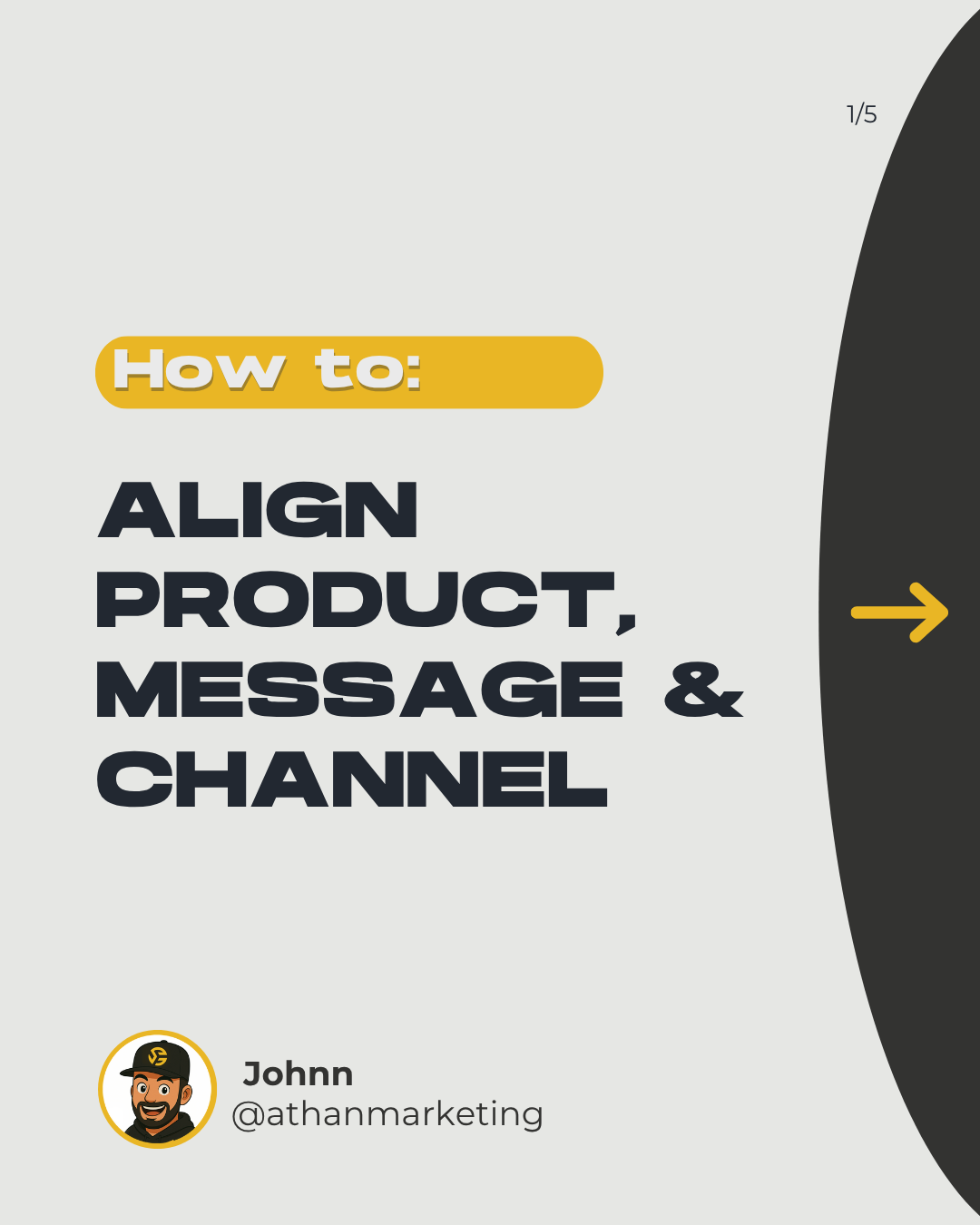
How to Align Product, Message & Channel
Below are the three pillars that make alignment possible and practical.
Be Crystal Clear
Clarity is the foundation of every effective marketing strategy. If you’re unclear about what you offer, who you serve, and what results you deliver, no amount of messaging or channel optimization will save you.
Being crystal clear means:
Defining exactly what your product is
Identifying who it is meant for
Communicating why it matters and what problem it solves
A confused mind doesn’t buy.
If your audience has to think too hard to understand your offer, they move on.
How to increase clarity:
Create a simple Offer Statement:
“We help [audience] achieve [outcome] without [pain] using [method].”
Ask 3–5 people in your target audience if your offer description is instantly clear.
Remove jargon, internal terminology, or anything that requires explanation.
Clarity also boosts SEO because you naturally write content around the language users search for—not complex internal wording nobody types into Google.
Sell the Outcome
People don’t buy products. They buy outcomes.
This is a core principle when learning how to align product message and channel, because customers are motivated by the transformation—not the tool.
Examples:
People don’t buy a CRM—they buy “more organized sales and more deals closed.”
They don’t buy a fitness program—they buy “feeling confident in 90 days.”
Outcome-based messaging aligns your product with what your audience truly wants.
To sell outcomes, your message should:
Describe the customer’s current pain
Paint the future state they want
Position your product as the bridge
This instantly makes your message more emotional, compelling, and aligned with the customer journey—boosting conversions across every channel.
Choose Wisely
Even with the perfect product and message, results collapse if you choose the wrong channels. This is why channel selection is a core part of how to align product message and channel.
Each channel has its personality and strengths:
LinkedIn: B2B, authority building, strategic content
Instagram/TikTok: storytelling, visual brands, community building
YouTube: education, long-form trust-building, evergreen visibility
Google Search (SEO/Ads): capturing demand, high-intent buyers
Email: nurturing, conversions, retention
Choosing wisely means selecting channels that match:
your audience’s behavior
the complexity of your offer
the type of message you need to communicate
Rule of thumb:
High-ticket = long-form education + trust channels
Low-ticket = high-volume visibility + short-form channels
Channel misalignment is one of the biggest causes of “my marketing isn’t working.”
Fix the alignment, and your offer starts converting with far less resistance.
Marketing Curiosity of the Week
Brands with strong alignment between product, message, and channel can generate up to 3x more conversions with the same budget.
This is because aligned marketing removes friction—your message hits the right people at the right moment, in the right place, with the right promise.
Ready to Align Your Strategy for Growth?
At Athan Marketing, we help businesses create clarity, refine their messaging, and choose the right channels so their marketing finally works together—not against them.
If you want a strategy that feels simple, aligned, and scalable, we can help.
Fix Your Marketing. Scale Smart.
Keep Learning: More Marketing Insights
If you found this helpful, explore more articles to strengthen your marketing foundations:
Share on Social Media
Frequently Asked Questions About Align Product, Message & Channel
What does aligning product, message, and channel mean?
It means your offer, communication, and marketing platforms all reinforce each other to attract and convert the right customers.
Why is clarity important?
If customers don’t instantly understand your offer, they won’t buy. Clarity improves conversions and reduces friction.
How does selling the outcome improve messaging?
It connects your product to the transformation customers want, making your message more compelling and conversion-oriented.
How do I choose the right marketing channels?
Select channels based on where your audience spends time and how they make decisions about your type of product.